

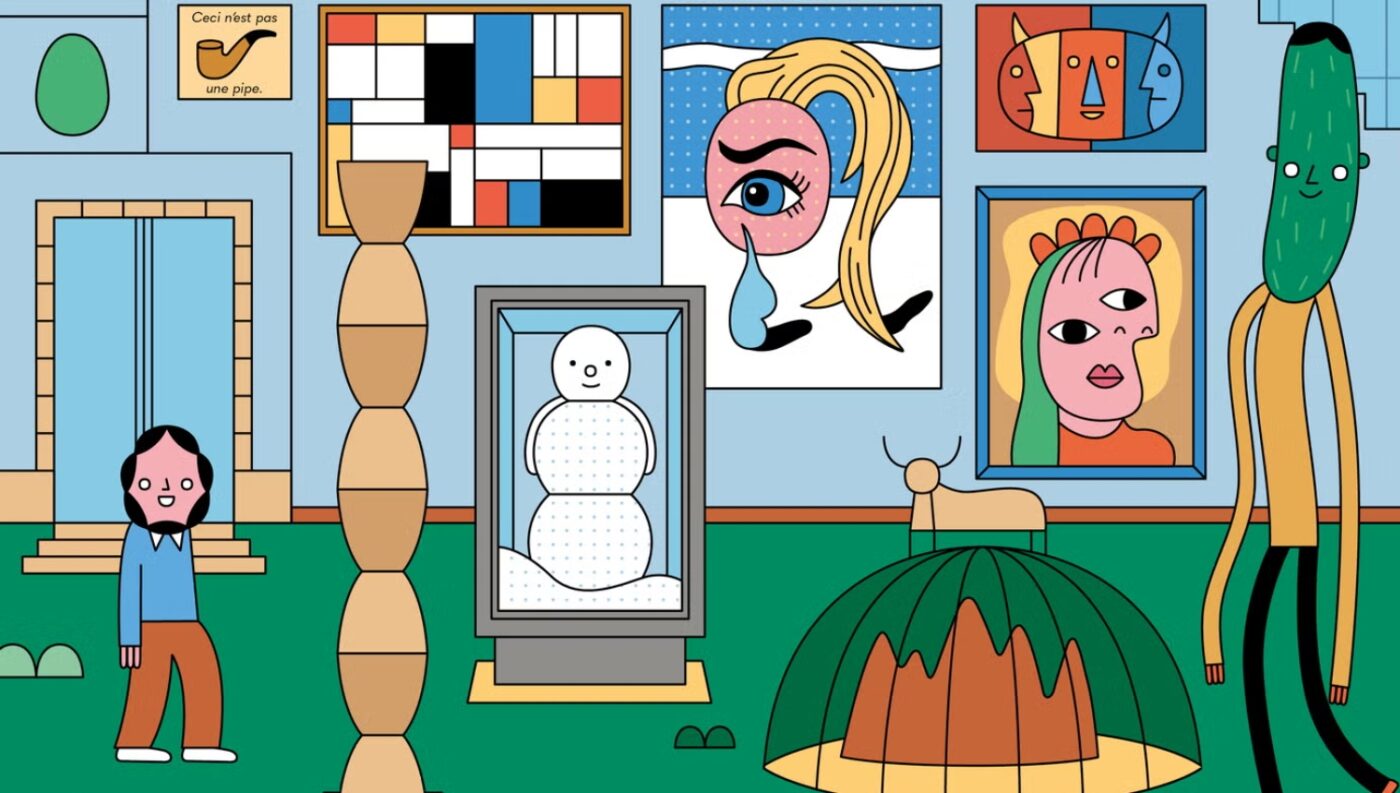
A recently released illustrated book is encouraging readers of all ages to rediscover the urban environments they move through every day. Created by Marcella Nicodemo and illustrator Andrea Q, and published by Quinto Quarto, the work reimagines the city as a visual and cultural map—turning everyday streets, buildings, and public spaces into something worth pausing over.
Though children’s literature is often dismissed as reading meant only for the young, it can be one of the sharpest tools for making sense of the adult world. By relying on images, distilled ideas, and visual shortcuts, it cuts straight to the heart of complex subjects. This book operates in exactly that spirit, functioning as an anatomy of contemporary urban life—a playful, approachable guide to understanding the places we call home.
A City to Be Seen, Understood, and Shared
The book’s index is designed as a miniature metropolis, where every location and address becomes a storytelling anchor. The goal isn’t merely to help readers find their way around, but to teach them how to truly look. Parks and construction sites, hospitals and theaters, museums and schools—each becomes a lens for interpreting the complexity of living alongside others.
The city is organized into conceptual districts: the City of Architecture, the City of Knowledge, the City of the Person, of Spirituality, and of Sport. Rather than a plain catalog of functions, the result is a dense web of relationships—a project full of wonder and imagination that still moves through the intersections and side streets of ordinary life.
“Every street has a voice, every building a secret. Look. Explore. Pay attention.” It’s a fitting invitation. Andrea Q’s illustrations, marked by clean lines and quiet wit, build an instantly recognizable visual world layered with references both pop and scholarly, mainstream and underground. His style blends graphic design, illustration, and a fondness for contemporary art fanzines. With decades of experience in editorial graphics, he has worked with publishers including Rizzoli, Mondadori, and Baldini+Castoldi, while pursuing personal artistic work spanning painting, ceramics, and embroidery.
Nicodemo’s writing accompanies the illustrations without ever overwhelming them, working through subtle shifts in meaning. In her hands, a street is not merely infrastructure but the ultimate public space; a port is not just logistics but a meeting point of languages and smells; a square evolves from ancient agora to political stage to the daily theater of coexistence. Trained as an archaeologist and long established in publishing, she has worked as an editor, ghostwriter, and coordinator for houses such as Feltrinelli and Il Saggiatore, bringing a refined sensitivity for narrative to writing that stays clear without ever turning dull.
Ultimately, the book returns to an idea both concrete and cultural: that space is always the product of intersecting stories, people, and imaginations—something deeply collective. That’s why it sits comfortably between a guidebook and an illustrated volume, part object to leaf through and part compass for finding one’s bearings. Its visual appeal is considerable, with rich color, clean compositions, and an almost cinematic rhythm, yet it never settles for surface alone. In fact, it builds its argument through the surface, offering one essential piece of advice: looking carefully again, with the curiosity of a child or an explorer, is already an excellent way to imagine the cities of the future.