

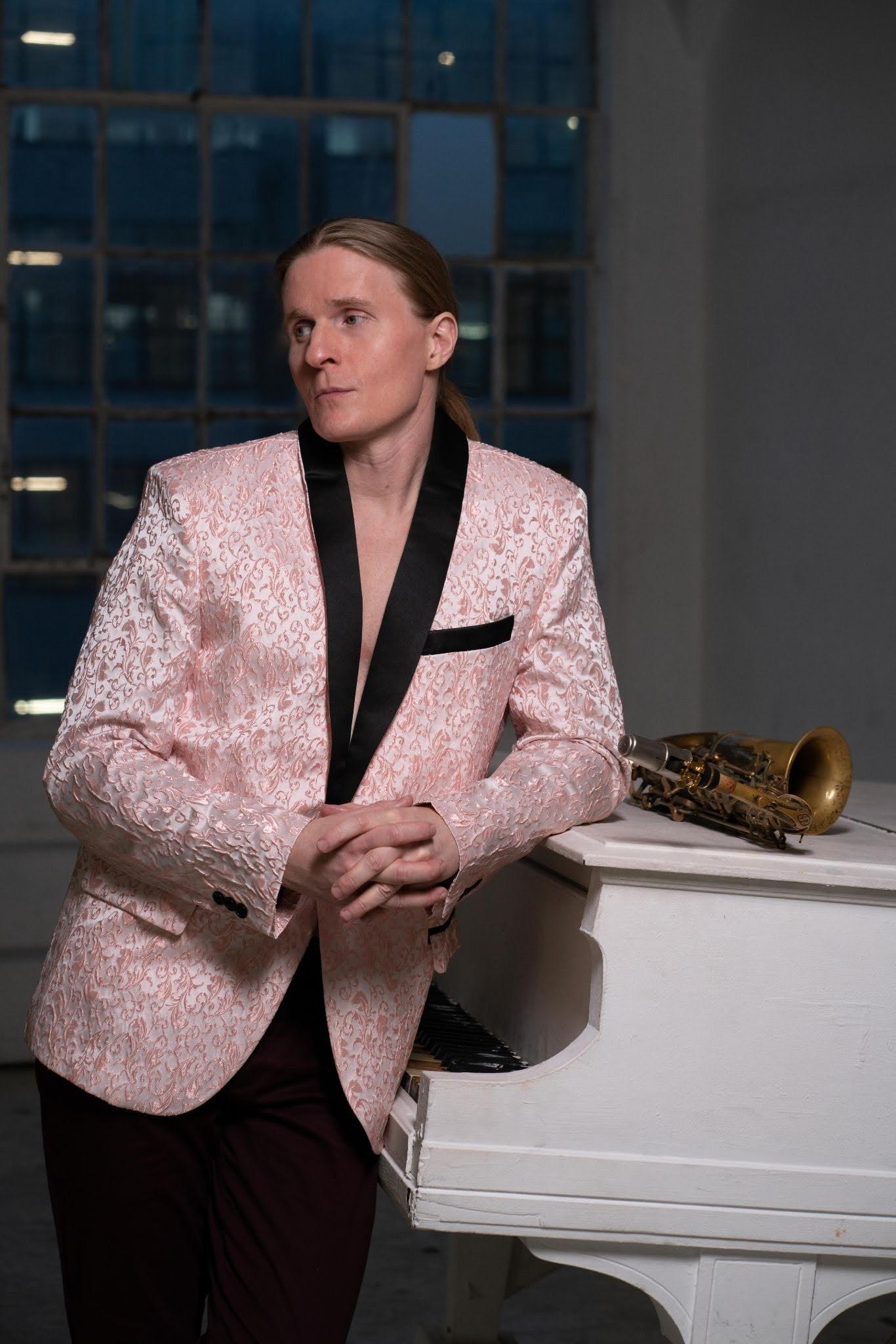
There is a familiar shape to most events built around a cause. A headliner takes the stage, a few sentences about the mission get read from a card between songs, a check gets presented under stage lights near the end of the night, and the audience goes home having supported something good without necessarily having felt it. Nick Stefanacci is building Smooth Jazz for Heroes to break that shape entirely.
Stefanacci, a touring saxophonist, is the founder and executive producer of Smooth Jazz for Heroes, staged through his company, Sweet Lion Music Group. The debut event takes place on May 15, 2027, at the Dream Live Performing Arts Center at American Dream in East Rutherford, New Jersey, and is built around honoring first responders, military heroes, and their families for an entire evening rather than a segment of it.
The event’s slogan is “One Night. One Mission.” It reads less like a marketing line and more like a design constraint, the kind of rule a producer sets for himself before booking a single act: everything in the room, the music, the pacing, the staging, has to serve one purpose, not compete for attention with it. That is a different proposition from most benefit concerts, where the mission and the entertainment often sit side by side rather than within each other.
Smooth Jazz for Heroes is also a proud supporter of Tunnel to Towers, the foundation that emerged from the September 11 attacks and is known for paying off mortgages for the families of first responders and service members killed in the line of duty, as well as building specially adapted homes for veterans who returned home catastrophically injured. Stefanacci has been precise about how that relationship should be described, as a supporting one, not something grander than what it is, which says something about the kind of credibility he is trying to build around the event more broadly. Nothing here is meant to be inflated.
For Stefanacci, September 11 is personal.
“9/11 was my first week of undergraduate studies at NJCU (New Jersey City University), which happens to be directly across the water from downtown Manhattan. I vividly remember standing outside the cafeteria and seeing the smoke bellowing into the sky and only imagining the chaos that was taking place on the streets below,” Stefanacci said. “For years I’ve been wanting to create a synergy to help give back and now that time has come with Smooth Jazz for Heroes.”
What Stefanacci is proposing is closer to a curated cultural evening than a fundraiser with a stage. Smooth jazz, as a genre, has always had a particular relationship to atmosphere, unhurried, warm, built for rooms where people actually listen rather than talk over the music. That quality is doing real work in the concept of this event. A night meant to honor first responders and military families benefits from a genre that gives space rather than demands it, and Stefanacci’s choice to build the entire evening around that sound, rather than a louder, more conventional gala format, is itself part of the story.
None of this is presented as a finished institution. The New Jersey debut is a single night in a single room, and Stefanacci has talked about Smooth Jazz for Heroes eventually reaching audiences in markets like Dallas and California, though nothing beyond East Rutherford is confirmed yet. The rollout through the end of this year is focused on building visibility and bringing sponsors into the fold early. Tickets are on sale now, and the artist lineup is being released in stages as part of the event build, with the headliner to be announced in mid-November. It is a deliberately unhurried build for an event that is, in its own way, about the value of not rushing a room.
If Smooth Jazz for Heroes succeeds at what it is attempting, the measure of it won’t be how large the guest list gets or how many markets it eventually reaches. It will be whether the people it is built for, the first responders, the military families, the people usually thanked from a distance, feel like the evening was actually theirs.