
Carla Simón was not yet six when both of her parents died of AIDS-related illness, contracted, in all likelihood, through heroin use. What she has of them is thin and secondhand: family anecdotes, and a set of letters her mother sent to friends and relatives.
Those letters turned out to be the film. “That was probably the most valuable thing that I had from her,” Simón says over a video call. She found them poetic, and felt she met her mother through them, and wanted to build something out of them. In Romería, her third feature, they have been collected into a diary that belongs to Marina, an 18-year-old orphan played by Llúcia Garcia in her first screen role.
Simón has mined her own history before. Summer 1993, from 2017, followed a small girl absorbing the sudden loss of her parents. Alcarràs, in 2022, drew on the rural Catalonia she grew up in. Romería is the more direct attempt: a reckoning with her ancestry, and with the question of exactly how her parents died.
A signature, and then a family
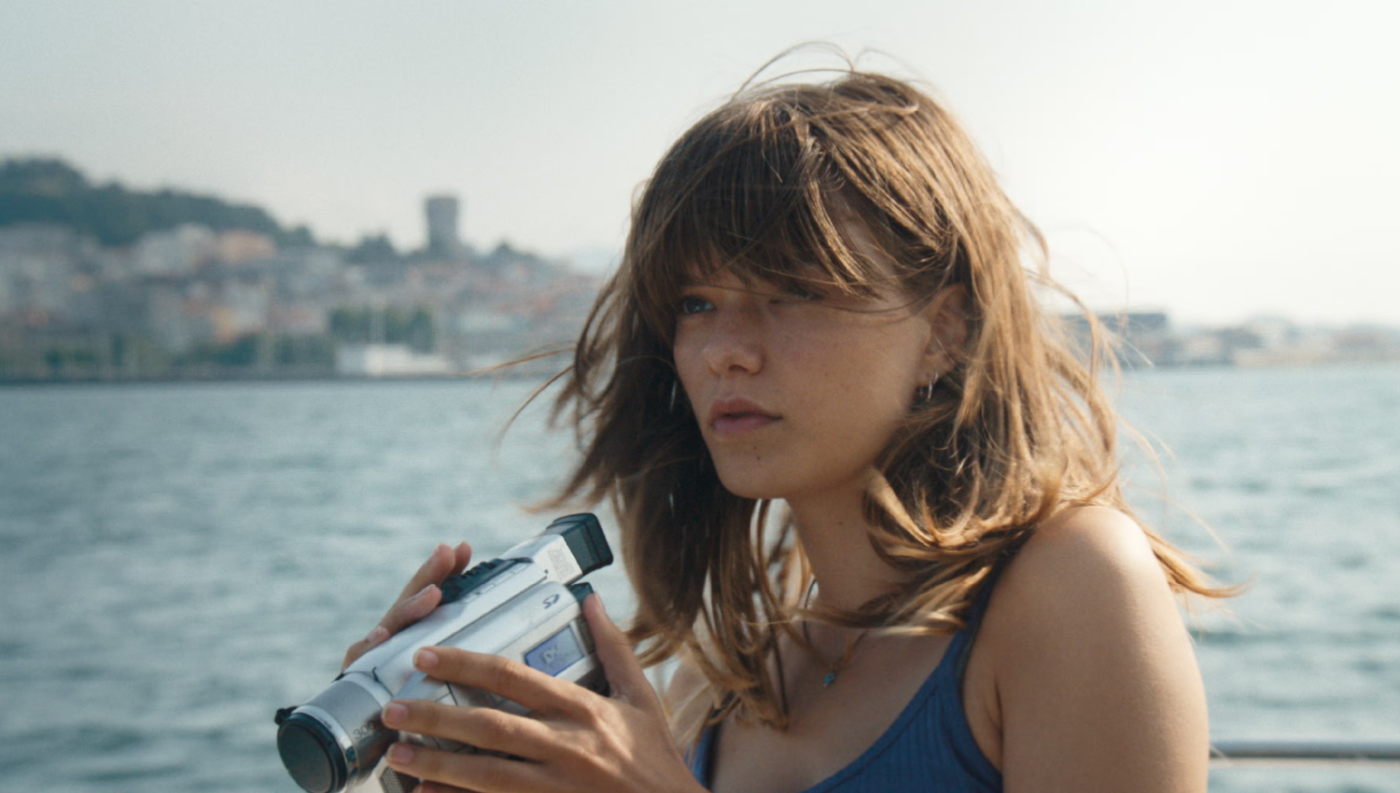
The premise is administrative. Marina needs signatures from her paternal grandparents to finish a scholarship application, so she takes a camcorder and travels to Vigo, on Spain’s Atlantic coast, to collect them. What she walks into is a crowded house of cousins, aunts, and uncles arranged around a matriarch who runs the place, played with real severity by Marina Troncoso.
The signatures become beside the point. Marina starts pulling at the story of her parents and finds that the family’s account of them does not hold together, and does not match the diary she is carrying. Small moments do most of the damage. Cousins hesitate to touch her because of what they have heard about her poisoned blood. By the time she reaches her grandmother, the shame in the house has become almost architectural, and some of it has transferred to her.
“I started this quest on my family to try to understand a little bit more about them,” Simón says, “and I realized that because their memory was very stained by the taboo and the stigma of heroin and AIDS, it was hard.”
The generation Spain decided to be ashamed of
That stigma is not particular to one family. Heroin moved through Spain in the years after Franco’s dictatorship ended in 1975, and the young people it caught, along with those who later tested positive for HIV, have been remembered by the country as a cautionary tale rather than as people.
Simón pushes back on that. Her parents’ cohort, she says, has been judged and told to carry guilt for something they walked into blind, at a time when nobody around them understood heroin or AIDS. Getting the tone right was the hardest part of making the film. She did not want a descent into hell, and she did not want to romanticize the drug either. The youth she was reconstructing was playful and happy and also genuinely bad.
Filling the gaps on purpose
The film began in frustration, in the specific irritation of a question that cannot be answered. Then Simón thought it through and the frustration lifted. Even if her parents were alive to ask, she reasoned, their two accounts probably would not agree with each other. Nobody was ever going to hand her a single reliable version.
“I realized that we should allow ourselves to fill the gaps through our imaginations,” she says, “and that I actually have the cinema to create the images that I’m lacking.” Inventing her parents’ story from her own vantage point, without arbitrating whether they had behaved well, turned out to be a release.
That logic shapes how Romería handles memory on screen. The relatives all speak sincerely, and none of them are dependable. Decades have passed and the recollections have drifted. The diary is the exception, because it was written as things happened, which makes it the one document Marina can build images from.
Simón lets those images run. The film’s central dream sequence, drawn in something close to a Miyazaki register and warped by heroin, puts Marina on the rooftop where her parents fell in love and where their addiction took hold. She cannot picture them in motion, having been too young to store the footage, so she casts the scene with what she has: she plays her mother, and a cousin plays her father.
“Her own ending of the trip is to allow herself to imagine this story,” Simón says. Getting close to the truth is preferable, she adds, but a version that lets you understand where you came from will do the job.
Finding Marina on the street
Casting was complicated by the double duty. Whoever played Marina also had to play her mother in the imagined passages. Simón’s team found Garcia walking down the street and asked her to audition. What sold them was a mix of innocence and appetite: someone who looked breakable but seemed capable of deciding to go find out for herself.
What comes next
Having spent three films inside her own family, Simón is moving on. Her next project is a musical with no connection to any of this. “Finally, I let them be,” she jokes.
What she leaves behind in Romería is an argument about how remembering actually works, and it is not flattering to the idea of a fixed past. “You don’t remember the fact,” she says. “You remember the last time you remember something.” Each retrieval bends it a little further toward whatever you are feeling at the time. Marina’s response, and Simón’s, is to stop treating that as a problem to be solved and start using it.