

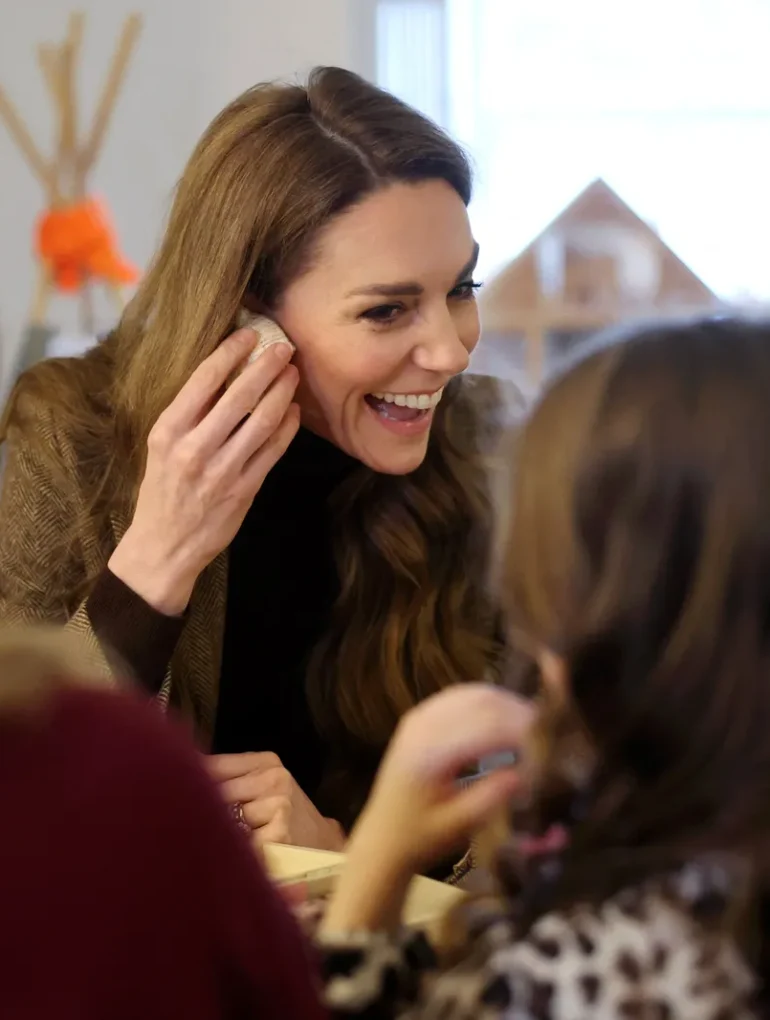
“She likes to do the school run and all those things,” royal commentator Katie Nicholl observed recently, noting how the Princess of Wales now ensures that every royal engagement first passes a critical test: “How does this work for us as a family?” This recalibration, Nicholl suggests, marks a dramatic departure from previous generations of royal motherhood. It also signals something more profound, a woman who has confronted mortality at 43 and emerged with clarified priorities about what matters and what doesn’t.

On World Cancer Day this week, Kate Middleton delivered a message that felt less like a royal obligation and more like a quiet manifesto. “Cancer touches so many lives, not only patients, but the families and friends and caregivers who walk beside them,” she said in a video posted to Instagram, her voice steady over footage from January’s visit to the Royal Marsden Hospital. The 40-second clip revealed a woman transformed not just by illness, but by the perspective it forced upon her. “As anyone who has experienced this journey will know, it’s not linear,” she continued. “There are moments of fear and exhaustion. But also moments of strength, kindness, and profound connection.”
The Diagnosis That Changed Everything
Kate’s cancer journey commenced in January 2024 with abdominal surgery at the London Clinic, initially believed to address a non-cancerous condition. Subsequent tests revealed otherwise, prompting a course of preventive chemotherapy that would keep the future queen largely out of public view for nearly a year. When she announced her diagnosis in March 2024 through an emotional video, she spoke candidly about the shock it delivered to both her and Prince William, and the immense difficulty of explaining the situation to their three young children, George, Charlotte, and Louis.
The announcement arrived during a period when Britain’s royal family faced unprecedented health challenges. King Charles received his own cancer diagnosis mere weeks before his daughter-in-law’s revelation, contributing to a sharp decline in official royal engagements. According to sovereign grant reports, the family participated in just over 1,900 events in the year leading to March 2025, down from 2,300 the previous year and dramatically lower than the 3,200 engagements managed during Queen Elizabeth II’s final years before the pandemic.
Remission and a New Role
In January 2025, Kate announced her remission during her first solo public appearance since diagnosis, a visit to the Royal Marsden where she had received treatment. The timing proved strategic. That same day, Kensington Palace revealed that she and William would become joint patrons of the Royal Marsden NHS Foundation Trust, transforming her patient experience into institutional advocacy. “The princess wanted to make this visit to express her appreciation for the remarkable team and to shed light on the world-class care and treatment provided by the Marsden,” a palace spokesperson stated.

During that visit, Kate demonstrated the empathy that now characterises her public engagements. Speaking with Katherine Field, a patient undergoing chemotherapy whilst wearing a cooling cap to minimise hair loss, the princess asked, “When did you start treatment? Oh, today? How are you doing? It’s really hard. It’s a shock.” She spoke about keeping a positive attitude and dressing warmly to manage treatment side effects, sharing details that felt genuinely personal rather than performatively sympathetic.
The Style Evolution
Observers immediately noticed shifts in Kate’s approach to fashion following her return to public duties. The princess who once dominated headlines for her coat dresses and fascinator selections now favours what fashion analysts term “purposeful dressing”, clean lines, structured blazers, and muted tones that redirect attention from garment to message. At 43, she has perfected the art of merging tradition with contemporary flair, choosing pieces that signal both authority and accessibility.
Her newfound fashion autonomy emerged partly from circumstance. Kate no longer works with a dedicated stylist, making her own choices with both personal and diplomatic intention. For the September 2025 state visit hosting President Donald Trump and First Lady Melania Trump, she selected a gold Phillipa Lepley gown paired with hand-embroidered Chantilly lace, a choice made with careful awareness of the president’s colour preferences. More recently, visits to Welsh textile manufacturers saw her champion British craftsmanship, wearing recycled pieces including a Ralph Lauren jacket she first wore in 2007.

This minimalist approach extends beyond aesthetics into philosophy. During her recent visit to Melin Tregwynt woollen mill and the Welsh Quilt Centre, Kate spoke extensively about craftsmanship’s value to community wellbeing and mental health. “From historical pieces to today’s work, it’s exciting to see how creativity continues to bring people together across generations,” she wrote on Instagram, words that could equally apply to her own evolution.
The Broader Context
Kate’s advocacy arrives as Britain confronts sobering cancer statistics. The NHS launched its first-ever breast screening awareness campaign in February 2025 after figures revealed that more than four in ten women invited for first-time screening don’t act on their invitation. NHS estimates suggest that improving screening attendance to 80% of eligible women could result in over 7,500 additional breast cancers detected at earlier, more treatable stages. King Charles echoed these concerns in his December 2025 address for Stand Up to Cancer, noting that at least 9 million Britons remain overdue for available cancer screenings, representing 9 million missed opportunities for early detection.
A Message That Resonates
“Today is a reminder of the importance of care, understanding and hope,” Kate concluded in her World Cancer Day message. “Please know you are not alone.” The phrase echoes her September 2024 video announcing chemotherapy completion, when she spoke directly to others facing similar battles: “I remain with you, side by side, hand in hand.” Katie Nicholl’s observation about family-first scheduling suddenly makes sense. A woman who has confronted cancer at 43 understands that power, influence, and protocol matter considerably less than presence, that showing up for school runs carries its own form of significance. The transformation isn’t just about fashion choices or patronages. It’s about a future queen who learned, perhaps earlier than anticipated, what actually deserves her limited time and energy.