

“In these troubled times, we need these reference points, these milestones of identity, to comfort and repair us,” declares François-Régis Gaudry, the Lyonnaise food journalist whose On va déguster series has become something of a culinary bible across France. He’s speaking about the resurgence of heritage dishes, but his observation extends beyond Michelin-starred dining rooms to the pavements and pocket-sized establishments redefining how Parisians eat. The street food revolution, for all its Instagram-fuelled spectacle, represents a fundamental shift in French meal culture, one that both honours tradition and challenges it with equal measure.
The question isn’t whether Paris has embraced street food. It demonstrably has, with empanadas, poutine, and lobster rolls now occupying prime real estate in a city once synonymous with three-hour lunches. Rather, the question is whether this transformation represents cultural erosion or evolution.

The Napoletana Arrives on Rue Notre-Dame de Lorette
For pizza just like in Naples, discerning Parisians now head to Magnà, the high-calibre pizzeria established by Julien Serri on rue Notre-Dame de Lorette. The concept, which earned recognition as best restaurant concept of the year for fast-casual dining at the 2019 Sandwich & Snack Show Academy, serves folded “purse” style pizzas reminiscent of traditional calzones, constructed exclusively with premium Italian ingredients. Serri’s attention to provenance, mozzarella from Fabio, truffles from Savini Tartufi, charcuterie from Bedogni, elevates what might otherwise be dismissed as mere fast food into something approaching gastronomy.
The standout offering, the T’ar’tufa, layers fior di latte mozzarella with tartufata cream, ham infused with rostello herbs, and truffle chips within a Neapolitan dough base that Serri has refined through countless iterations. The restaurant’s commitment to Caputo flour signals an understanding that authenticity begins with fundamentals. Yet Serri also incorporates elements of modernity, quinoa soufflé and rice flour, demonstrating that tradition need not mean stasis. Located at 48 Rue Notre Dame de Lorette in the 9th arrondissement, Magnà operates Tuesday through Saturday, with extended hours on Friday and Saturday evenings, and welcomes guests on Sunday as well.
The Fast-Casual Phenomenon Reshapes French Dining
Quick-service restaurants now command 49.48% of France’s foodservice market share in 2025, reflecting an unmistakable consumer pivot towards fast-casual dining that marries speed with quality. This isn’t simply about burgers replacing boeuf bourguignon. Rather, it represents a recalibration of how French consumers, particularly urban millennials and Gen Z populations, conceptualise the act of eating. The pandemic accelerated behaviours that have since become permanent: digital-first ordering, delivery-centric consumption, and the expectation that excellent food should be accessible without the formality of tablecloths and three-hour windows.
“I’m more interested in the relationship between efficiency and emotion,” Gaudry explains, a philosophy that captures the tension at the heart of modern French dining. “How can you not spend hours and touch your friends?” he asks, acknowledging that the pleasures of cooking, and by extension, eating, shouldn’t require temporal excess.

Heritage Meets Innovation Across the City
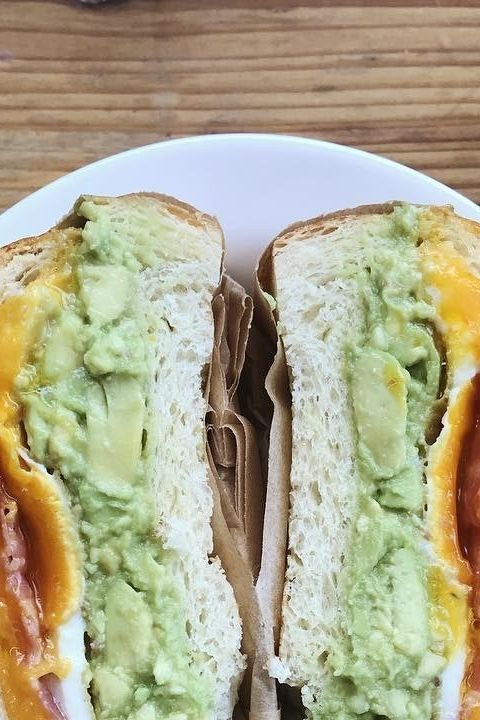
At Sando Club in the Bastille neighbourhood, Delphine and Doriane, alumni of Popine and Thierry Marx’s esteemed Parisian bakery, celebrate the Japanese sandwich in its myriad forms. Their offerings range from chicken panko breadcrumb with black sesame to pulled braised beef, all united by homemade, supremely soft bread modelled after Japanese shokupan. Located at 1-3 Passage Thiéré in the 11th arrondissement, the establishment represents what analysts might call “third culture” cuisine, recipes and techniques drawn from childhood experiences and training, then recombined into something cohesive.
With interiors reimagined by Martin Brudniski and a fresh menu courtesy of Cyril Lignac, Le Chardenoux represents street food’s aspirational ceiling. The restaurant’s lobster roll, constructed with blue lobster, crunchy celery, apple, avocado, and creamy cocktail sauce nestled between brioche halves, delivers luxury in handheld format. This approach, pairing premium ingredients with casual presentation, characterises a broader movement within French dining where the boundaries between gastropub and gastronomic temple have grown deliberately porous.

Hanoï Corner, celebrated for both coffee and bò bún, has built its reputation on authentic Vietnamese bánh mì. In their restaurant on rue Blanche, the archetypal sandwich employs baguettes from Farine&O, widely regarded as France’s finest bakery, filled with vegetables, fresh herbs, and a choice of beef, pork, or vegetarian alternatives. The establishment exemplifies street food done right, rooted in genuine tradition, executed with quality ingredients, and served by operators focused on longevity rather than Instagram metrics.
The Counter-Narrative and Future Vision
Critics argue that Paris’s street food explosion often prioritises novelty over nourishment. The critique gains force when examining establishments that seemingly design food for virality, the cheese-pull videos, the over-stuffed sandwiches that collapse upon first bite, the fusion combinations that respect neither parent cuisine. When asked about contemporary dining trends, historian Patrick Rambourg notes that French meals “may be less structured than before, but there’s still a structure,” suggesting resilience amidst transformation.
“These stories are as important to me as the dishes themselves,” François-Régis Gaudry insists, articulating a principle that applies equally to starred establishments and street corners. Paris’s casual dining revolution succeeds when it honours this wisdom, when Vietnamese bánh mì makers trace their recipes to family traditions, when Italian pizza makers source Caputo flour and Savini truffles, when Japanese sandwich specialists master shokupan before attempting innovation. French meal structure may have loosened, but it hasn’t vanished. It’s adapted, incorporating global influences whilst preserving core values of quality, conviviality, and the understanding that food represents far more than fuel. Street food in Paris works when it remembers this, when convenience serves rather than supplants the pleasures of eating well.