

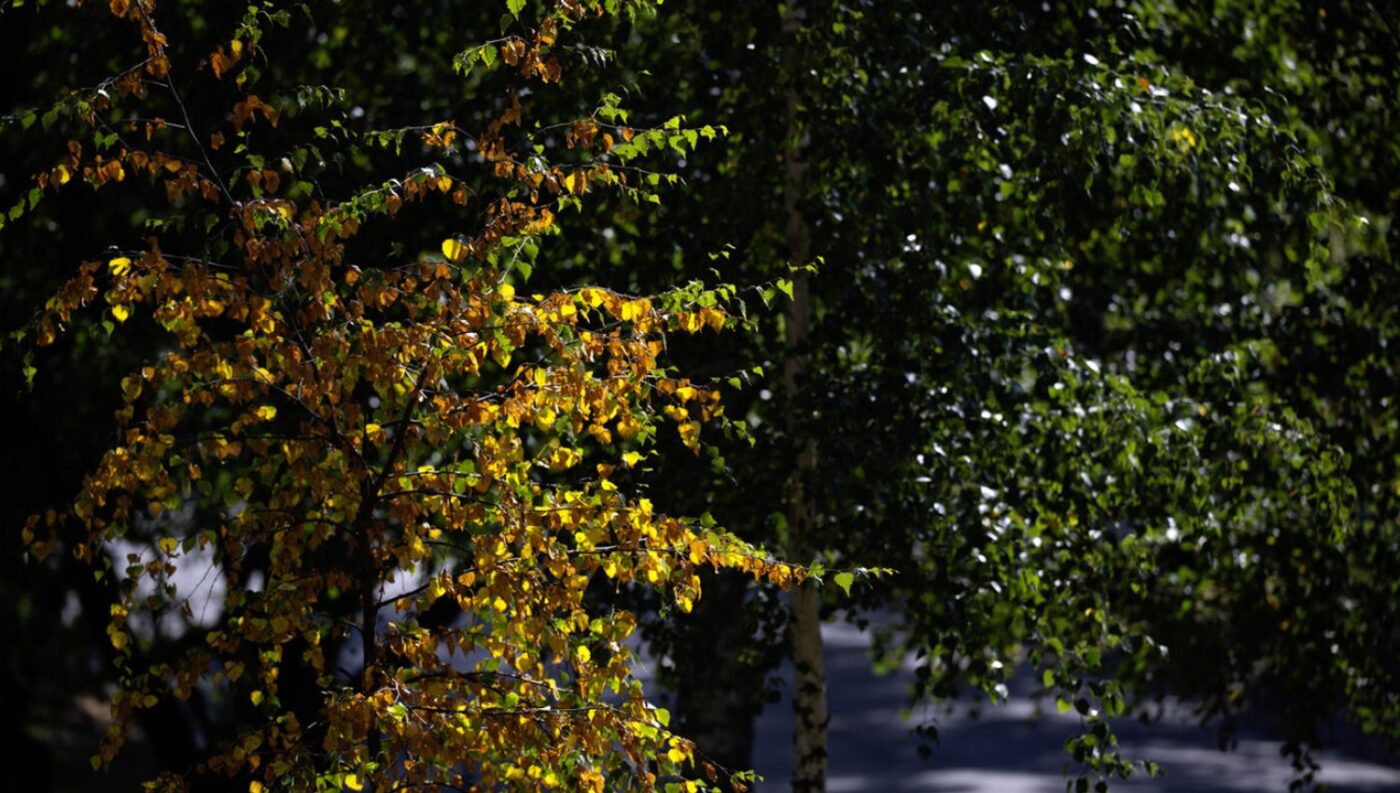
In several parts of Sweden, trees have shown autumn colours since mid-August. According to researchers, it has nothing to do with the season arriving early and everything to do with the dry summer. The trees are not turning as a farewell to warm weather, but reacting to a stressful situation, says researcher Henrik Sjöman.
Sjöman, scientific curator at the Gothenburg Botanical Garden and a researcher at SLU Alnarp, said he had recently seen yellowed trees in Österlen. Trees lose water through their leaves, he explained, and if the soil becomes too dry they must shed them quickly or risk an even worse situation. “When the tree decides to die back, it absorbs the green chlorophyll, which is very nutritious,” he said. “Then other colouring substances appear that have always been in the leaves, but are not visible because of the green chlorophyll.”
Different species handle drought differently, and some change colour faster than others. The birch is among the first to react, while an oak tends to hold onto its leaves and green tone a little longer. The result this year is a patchwork of early yellows in landscapes that would normally stay green well into autumn.
Forest researcher Ola Langvall at SLU shares the view that drought in southern Sweden is the main driver, but notes other possible factors, from fungus-infected leaves to the theory that leaves have a fixed lifespan, prompting an earlier fall. “We see a clear tendency for that in our observations of birch, which we have been doing for 20 years now,” he said.
Sjöman said the effect of drought on vegetation became especially clear during the extreme summer of 2018, when birches shed their leaves and stood bare by the end of July. Without such resource stress, he added, the normal time for trees to change colour would be late September or October, making this year’s early display a visible marker of just how dry the season has been.