

More frequent heatwaves are pushing up ozone levels in the air we breathe, new Swiss research finds.
Hot, dry, sunny conditions encourage the build-up of ozone near the ground, the Swiss Academy of Sciences (SCNAT) explained in a recent fact sheet. Even though overall air quality has improved, the ground-level ozone limit is still breached on a regular basis.
Ozone plays very different roles depending on where it sits in the atmosphere. High up in the stratosphere, the ozone layer shields the planet from damaging UV radiation. Close to the ground, however, the same gas irritates the airways, harms vegetation and behaves as a greenhouse gas.
Switzerland has cut emissions of the pollutants that lead to ozone formation through tighter rules, yet the safe thresholds continue to be exceeded. Part of the explanation lies in natural processes and the intricate photochemical reactions that create ozone. On top of that, climate change is making the situation worse.
The protective stratospheric ozone layer, meanwhile, is healing only gradually, even though chlorofluorocarbons were banned back in 1989. Emissions of nitrous oxide, another ozone-destroying substance, are actually climbing as fertiliser use expands worldwide.
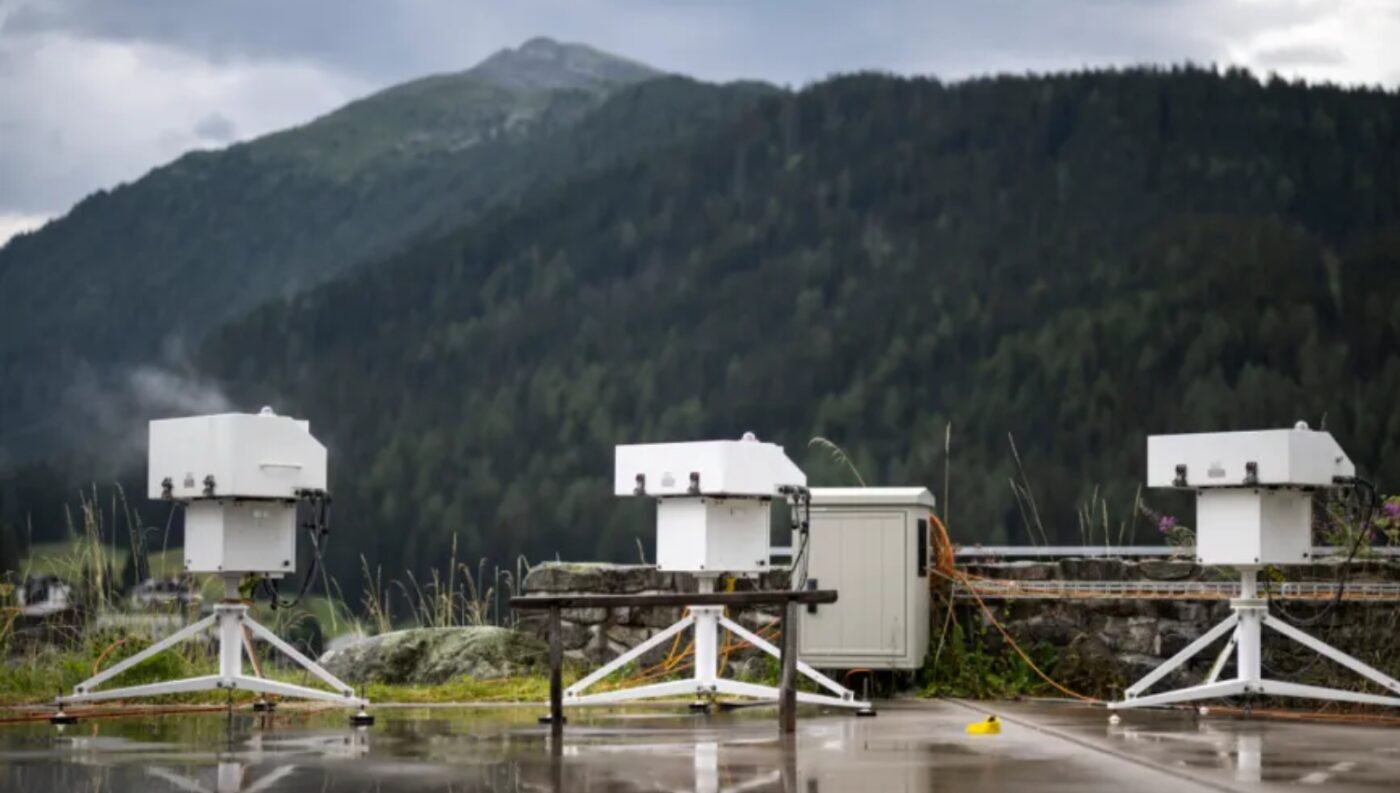
SCNAT stresses that worldwide monitoring is essential for keeping track of these trends. Switzerland plays a notable part here, maintaining the longest continuous run of ozone measurements anywhere in the world. The record started a century ago in Arosa and is now carried on in Davos by the Federal Office of Meteorology and Climatology, MeteoSwiss.
The origins of that record trace back to physicist FW Paul Götz, who initially investigated solar radiation while working at a tuberculosis sanatorium in Davos. His goal was to document scientifically how the Alpine climate affected people’s health, according to a MeteoSwiss blog post.
Working alongside British physicist Gordon Dobson, Götz first deployed what became known as a Dobson spectrophotometer on 23 July 1926. The device gauges how the atmosphere filters sunlight across different wavelengths. It went on to become the international benchmark for measuring total ozone and remains in service to this day.