
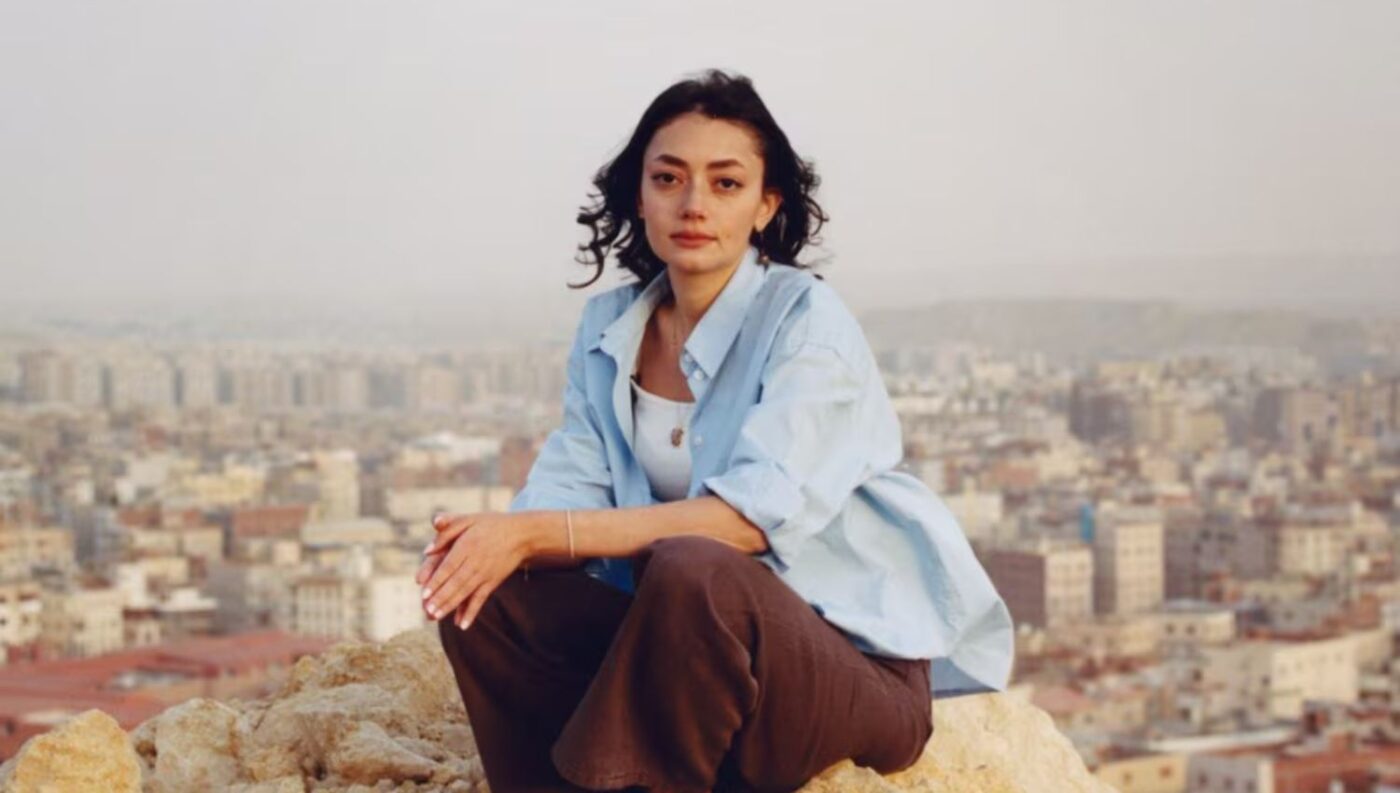
The Palestinian journalist and author of The Eyes of Gaza on the books, films and music she returns to, and why she refuses to give up on the future
For three weeks in March, Plestia Alaqad was somewhere she had never expected to find calm: the middle of the Atlantic, on a boat with nine other young activists. Nobody owns the ocean, the 24-year-old journalist and author points out, which is exactly why it felt like the group could build their own Nutopia out there.
The voyage was filmed for the forthcoming documentary The Ark of Change. Everyone on board picked a social issue to speak about. Some chose education, others women’s rights. Alaqad chose genocide.
Most people first encountered her in 2023, when she was 21 and living in Gaza, filing reports on the genocide from an iPhone. Before she evacuated to Australia, she documented the ordinary and unbearable business of daily life: people in displacement camps facing starvation and disease, neighbourhoods reduced to rubble, the minutes and hours immediately after Israeli air strikes. Journalists were being systematically targeted by Israel. She kept reporting anyway.
Her first book, The Eyes of Gaza, arrived last year to critical acclaim. Built from diary entries written in the wake of October 7, it is intimate and frequently harrowing, and it shows a version of life under occupation that never fits into a social media clip. When people ask her what Gaza is actually like, she tells them to read it. There is the genocide, she says, and there is also waking up every morning, surviving it, and getting on with the day. Plenty of books about Gaza exist. Very few are written by Palestinians who have lived there, and she is glad that is starting to change.
A year on from publication, the picture has not improved. Alaqad is now a master’s student in Beirut, living under Israeli bombardment again, and looking for new ways to reach people. One of them is acting: she makes her screen debut in the Palestinian horror film The Visitor. Staying hopeful is not optional, she says. She is frightened much of the time and does things anyway, because stopping is not something she can afford.
Below, she shares the culture that keeps her going.
Read
Mornings in Jenin, Susan Abulhawa (2006)
“I first read this book, which follows a Palestinian family through three different generations, in 2019 and didn’t want it to end,” she says. Palestinians in Gaza are cut off from the rest of Palestine in the West Bank, so the novel gave her something she could not otherwise reach. Her test of a good book: years later, you still remember exactly how it made you feel.
Watch
The Shawshank Redemption, Frank Darabont (1994)
There is a line in the film about hope being the best of things, and about good things never dying. It stayed with Alaqad in high school to the point that she printed it out and taped it to her bedroom wall. She is clear-eyed about it: nobody is hopeful all the time, and pretending otherwise is not realistic. She still hopes Palestine will not always look like this.
All That’s Left of You, Cherien Dabis (2025)
She watched this one with Karma, a childhood friend who is also from Gaza. They both cried, more than once, because what was on screen was simply their own lives. Sometimes you do not fully register what happened to you until you watch it played back, she says, and then the question becomes how you survived it at all.
Modern Family
Between lectures and cooking (or ordering in, on the days the energy is not there), this is what goes on in the background. Purely comforting. She notices that when she tries to switch off the news, she often drifts straight into something Palestine-related without meaning to. When it all gets too heavy, Modern Family goes back on.
Listen
Faia Younan
Alaqad grew up listening to Younan with her best friend, Dana. The two later met in Lebanon and became friends. What she admires most is the authenticity: in a culture built on trends, Younan stays herself.
Buy
Wear the Peace × Plestia
All profits from her collaboration with the clothing brand go to the Ghassan Abu Sittah Children’s Fund, which supports children affected by the genocide in Gaza and the war in Lebanon. The design came together around a turtle embroidery, with a poppy, Palestine’s national flower, on the inside and a keffiyeh pattern on the outside. Turtles are patient and carry their homes on their backs, which is how she thinks of Palestinians. None of this began in October 2023. For decades, she says, her people have been patient and carrying their homes wherever they go.